
Chimney sweeping, inspection and repair for St. Cloud homes, from the old brick downtown to the newest streets.
A lakeside Osceola County city of about 75,000 people, founded in 1909 as a community for Union veterans, where the typical home went up in 2003 and about 57 percent were built in 2000 or later.
- Write any timeThe form stays open
- We call you backTo settle on a day
- Based in St. CloudOsceola County, Florida
Four jobs we take on, from the roofline down to the hearth.
 Book a sweep
Rods and brushes work from the damper up to the cap, then the shelf and firebox floor are cleared. That takes away the soot and glaze a stray spark could catch on.
- Brushed from damper to cap
- Shelf and firebox cleared
- A plain note on condition
 Book an inspection
Each of the six parts is checked in turn, starting on the roof. Once a year is the usual advice, plus after a bad storm, a chimney fire or a sale.
- Cap, crown and flashing first
- Flue followed end to end
- Findings in everyday words
 Book a repair
We mend cracked crowns, loose or rusting caps, tired flashing, open mortar joints and split firebrick. Early repairs stay small; a wet summer makes the late ones bigger.
- Crowns sealed or rebuilt
- Caps and screens renewed
- Flashing and mortar redone
 Book a cleaning
Made for a hearth or stove that is only lit now and then. We clear ash and soot from the firebox, brush the pipe and test the damper from open to shut.
- Firebox and shelf cleared
- Stove and insert pipe brushed
- Damper opened and shut fully
Six parts from cap to firebox, and what Florida weather asks of each.
A walk down the chimney from the roofline, with the rain, wind and lightning of Osceola County in mind.
The cap, above the roof.
First in line for every storm. The lid turns rain aside and the mesh holds back embers and nesting birds. A factory-built metal chimney comes with a listed cap assembly under R1005.1, which means a replacement has to match what was listed.
Look fordents from flying debris, loose mesh, rusting screws and seams
The crown, under the lid.
The crown is where rain leaves the masonry, and Florida's residential code asks for a top that slopes to drain, a drip edge and a caulked joint around the liner (R1003.9.1). Hairline cracks are the doorway for a wet summer.
Look forhairline cracks, crumbling corners, a slab lifting from the tile, no drip edge
The flashing, at the roof.
The metal collar where brick meets roofing takes wind-driven rain sideways. A brown ring on the ceiling, or damp insulation beside the stack in the attic, is often how a lifted edge announces itself.
Look forlifted edges, cracked sealant, rust trails, stains on the drywall below the stack
The liner, inside the stack.
Smoke travels up the liner, and the code requires one in every masonry chimney (R1003.11). The typical St. Cloud house dates from 2003, so its flue has more than twenty years of use behind it: long enough for a clay tile to crack or a joint to open.
Look foropen joints, cracked or slipped tiles, a liner that does not suit its appliance
Smoke chamber and damper.
Soot gathers first on the shelf over the damper. Occasional fires fill it slowly, though it never stays truly empty, and a damper left ajar invites rain, leaves and small animals indoors.
Look fora tarry or glassy coating, a damper stuck open, a shelf that crumbles or leans
The firebox, home of the fire.
Every fire bakes the firebox walls. Firebrick crazes, mortar joints let go and, in a metal factory-built unit, panels can warp or rust. A narrow gap is a small job; heat that has reached the framing behind it is not.
Look forjoints that gape, bricks that crack or shed flakes, a hearth slab that wobbles
What Central Florida weather does to a St. Cloud chimney.
Rain, wind and lightning as official records show them in and around Osceola County, and why a small fault is easier to mend before the next storm.
01 / 03
53. Inches of rain a year, rounded, in the Kissimmee normals
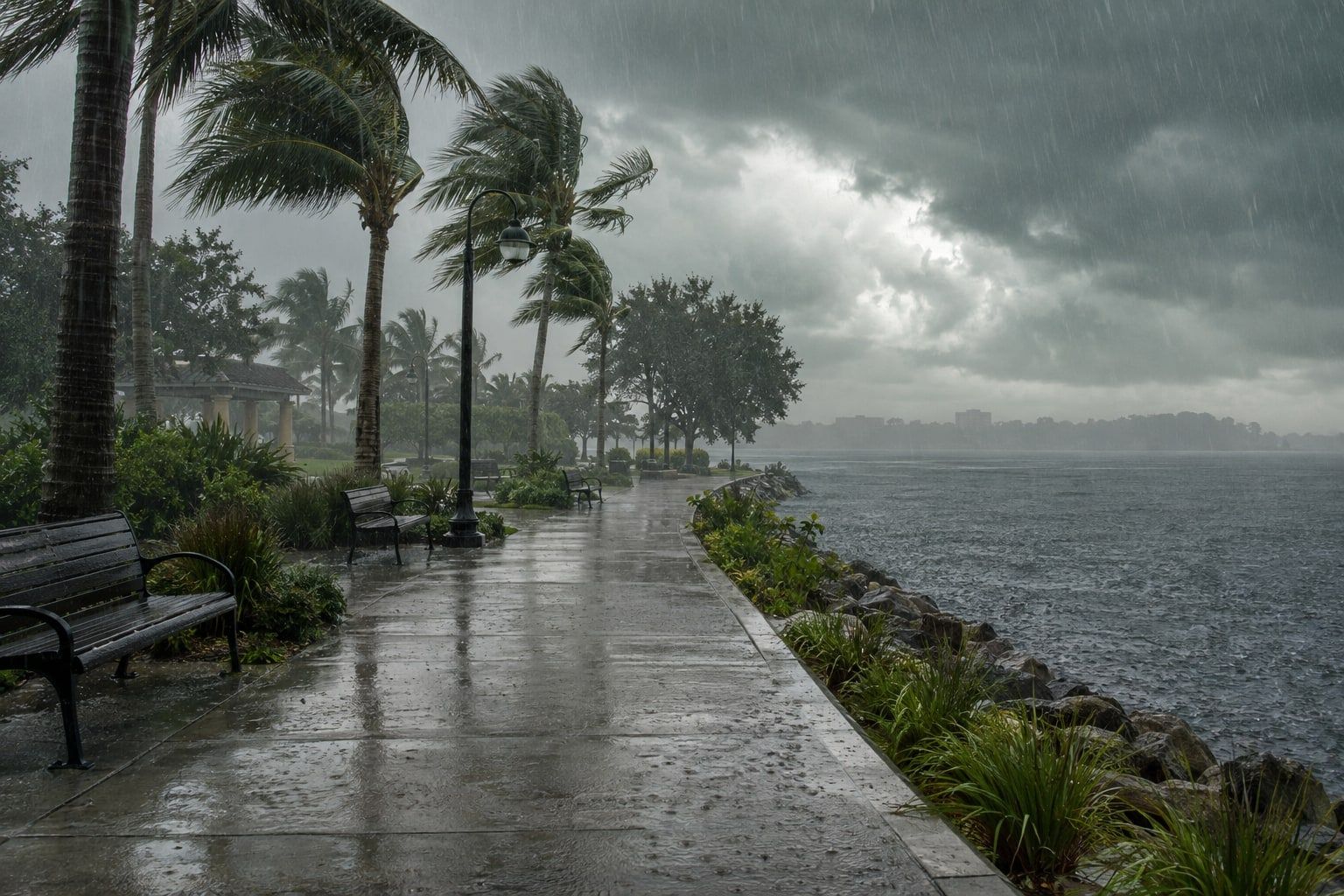
The 1991 to 2020 normals of the Kissimmee station, about 9 miles west of downtown St. Cloud, come to 52.57 inches a year, and the three months from June to August bring 24.77 of them, nearly half. A wet summer tests every joint overhead. Water looks for hairline splits in the crown and for flashing that has curled up at a corner. Hurricane Ian damaged an estimated 4,100 structures in Osceola County, and East Lake Tohopekaliga swelled until the city issued a voluntary evacuation covering more than 3,400 residents.
Source: NOAA NCEI 1991 to 2020 normals, Kissimmee 2; NHC Tropical Cyclone Report on Ian; WKMG News 6, October 7, 2022
02 / 03
62. Knots of peak gust at an amateur weather station in St. Cloud during Charley
Hurricane Charley crossed Osceola County on the evening of August 13, 2004. The National Weather Service office in Melbourne lists a 62-knot gust, about 71 mph, at an unofficial amateur station in St. Cloud at 8:21 pm, and a 65-knot gust at the Kissimmee airport before its sensor failed. Its county summary records widespread damage to houses, roofs and pool screens, mostly from fallen trees. After wind of that kind, look at the top of the stack first: a shifted lid, a bent screen, flashing peeled back.
Source: NWS Melbourne, Hurricane Charley survey and Post Tropical Cyclone Report, August 2004
03 / 03
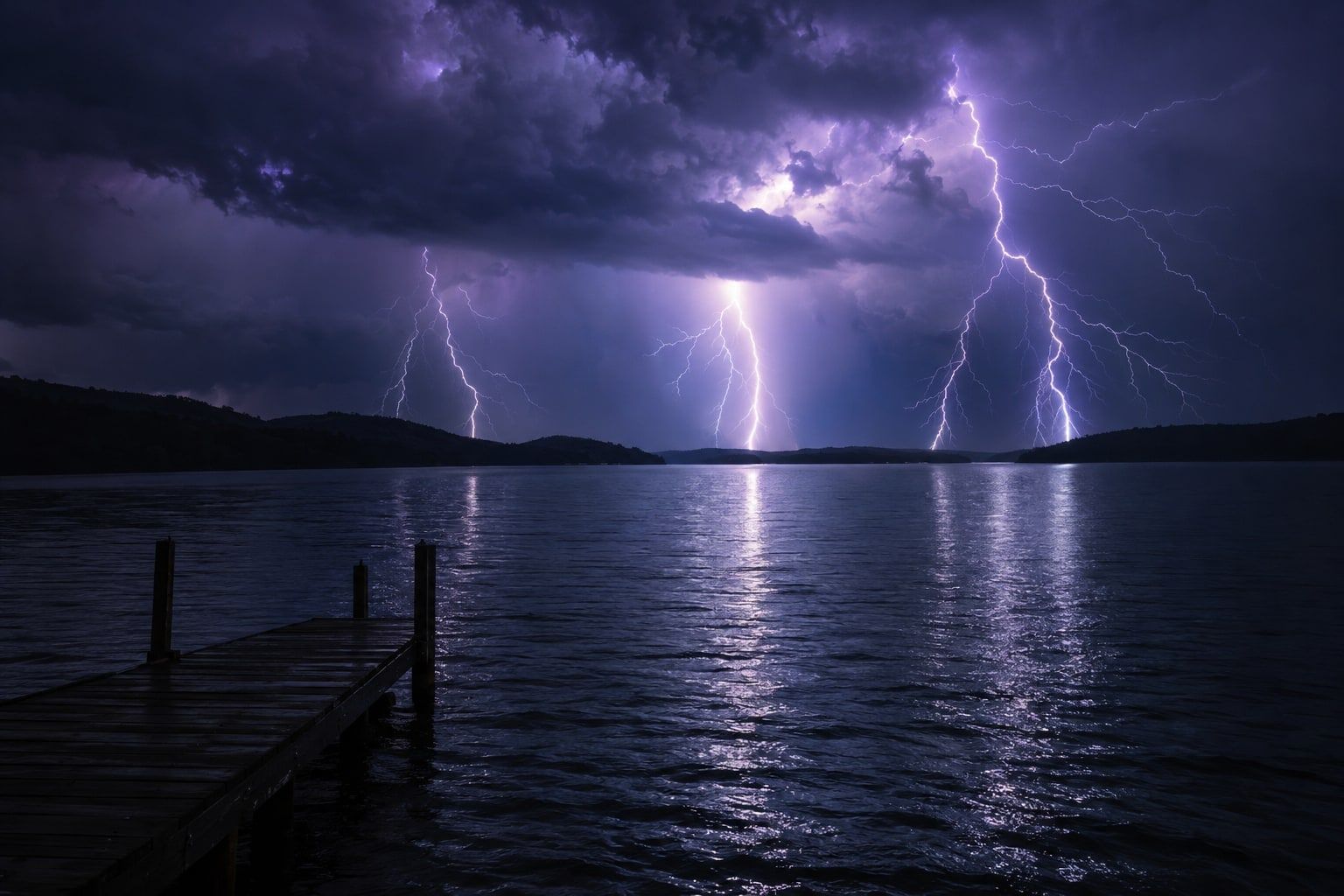
80. Thunderstorm days a year, the low end of the 80 to 90 range for interior central Florida
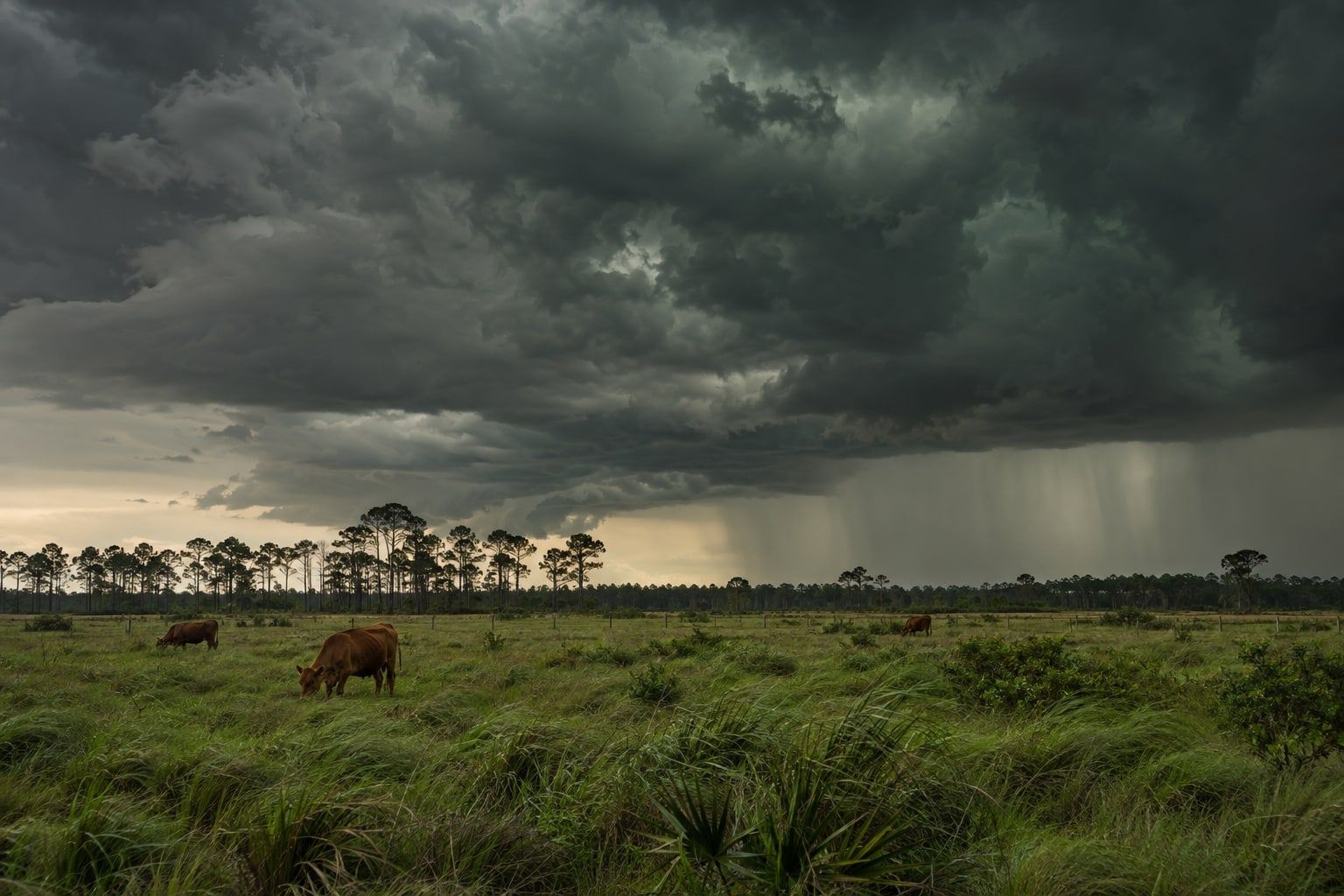
To the weather service office in Melbourne, central Florida is the Lightning Capital of the United States, with 80 to 90 thunderstorm days a year inland. On average, it says, lightning takes more lives in Florida than every other weather hazard together. When a strike lands close to home, ask for the entire chimney to be checked, screen and cap too. A spark arrestor on masonry needs four times the flue outlet in open area (R1003.9.2), and soot-clogged mesh loses that margin.
Source: NWS Melbourne, lightning information and statistics pages; Florida Building Code Residential, 2023 edition, section R1003.9.2
St. Cloud, from the lakefront to the newer neighborhoods.
We are based in St. Cloud, a city on the south shore of East Lake Tohopekaliga in Osceola County. The county dates its founding to 1909, and the Census Bureau estimated 74,960 residents in July 2025. On the map you will find the city limits and eight places inside them: on the water at the north, the downtown just south of it, to the east, in the northwest, in the west and, across the south, , and .
Wondering whether your street is inside the line? Call (321) 204-8868 and we will check with you.
Map data: terrain from AWS Terrain Tiles, lakes and city limits from the Census Bureau's TIGERweb, place names and positions from OpenStreetMap contributors.
- St. Cloud
- Lakefront Park
- GAR Memorial Hall
- Mount Peace Cemetery
- Blackberry Creek
- Peghorn Park
- Ted Broda Memorial Park
- Water Tower Park
- Gramercy Farms Park
Questions St. Cloud homeowners put to us.
Brief answers, with sources.
How frequently should I have the chimney swept?
Use depends on burning habits, not on the calendar. NFPA 211 advises one inspection each year, and what turns up on the flue walls determines whether a sweep is needed. In Florida fires are occasional: the Energy Information Administration counted 77 percent of the state's homes as all-electric in 2020, the top share in the country. Even a flue lit now and then gets coated, and one left idle can fill with leaves or a nest.
Source: Energy Information Administration, Today in Energy, 12 July 2022; NFPA 211
Does buying or selling a house call for a chimney check?
NFPA 211 names a sale or transfer as a reason for a Level 2 inspection. That reaches past what you can touch: the attic and the crawl space are checked, and a camera travels up the flue. St. Cloud's housing comes in layers, too. The Census Bureau's 2020 to 2024 survey estimates put 12,909 of 22,807 homes (about 57 percent) at 2000 or later and 4,458 (about 20 percent) before 1980, so a neighbor's chimney may say little about yours.
Source: American Community Survey, Census Bureau (2020 to 2024, five-year, table B25034); NFPA 211
What should I check after a hurricane or tropical storm?
Start at the top, where the cap, crown and flashing take wind and rain before any other part. Charley's August 13, 2004 passage over Osceola County put a 62-knot gust on a St. Cloud station, and Ian damaged an estimated 4,100 structures in the county in 2022. We know of no published count of chimney damage from Florida hurricanes, so a careful look from the ground (binoculars help) or a visit from us is the way to check.
Source: NWS Melbourne's Hurricane Charley survey; National Hurricane Center report on Ian
Is there a bad time to deal with a bird or a bat in the flue?
Yes, there are two. Federal law protects chimney swifts, and the Fish and Wildlife Service says a nest holding eggs or young cannot be taken down without federal authorization, so an occupied flue waits until the birds have flown. They arrive in March or April and leave in August or September, and the Service suggests cleaning between September or October and March or April. Bats raise their young in Florida from mid-April through mid-August, and a colony cannot legally be excluded during that stretch.
Source: FWS page on chimney swifts and its policy memo MBPM-2; FWC's bat maternity bulletin
Does a chimney have to wear a cap?
For masonry, yes. The code names a concrete, metal or stone cap that slopes to drain and carries a drip edge, with a caulked break where it meets the liner (R1003.9.1). Fitting a spark arrestor or rain cap adds a rule: four times the flue outlet's open area (R1003.9.2, R1003.9.3). Swifts nest in open flues, so check before capping one that is in use.
Source: Florida Building Code, Residential (8th ed., 2023), section R1003.9; FWS
Mine is a prefab metal fireplace. Should someone look at it?
Yes, since different rules apply. A factory-built fireplace comes with a listing, a label and UL 127 testing (R1004.1), and the flue pipe above it needs its own listing and label (R1005.1). Unvented gas logs may go inside only if that fireplace system was specifically listed for them (R1004.4). The CSIA also wants gas chimneys checked every year.
Source: Florida Building Code Residential (2023), R1004 and R1005; Chimney Safety Institute of America
Will you come to my neighborhood?
We work out of St. Cloud, in Osceola County. If your home is outside the city limits, phone (321) 204-8868 and ask whether we can reach it.
How do I set up a visit?
Phone (321) 204-8868, or leave a note on the form below at any hour; someone calls back to agree a time.

What has you thinking about the chimney?
Describe it on the form or just phone. Someone rings you back and a day gets chosen between the two of you.
- 1Reach us Phone, or send the short form.
- 2We call back We ring you and settle on a date together.
- 3Roof to hearth The six parts are checked in turn, cap first.
- 4You decide We walk you through what we found; any work is your call.
Request form
Open day and night